
 Ambulance
911 8483 911 Helpline
916 6216 916
Blog
- Apr 10, 2026
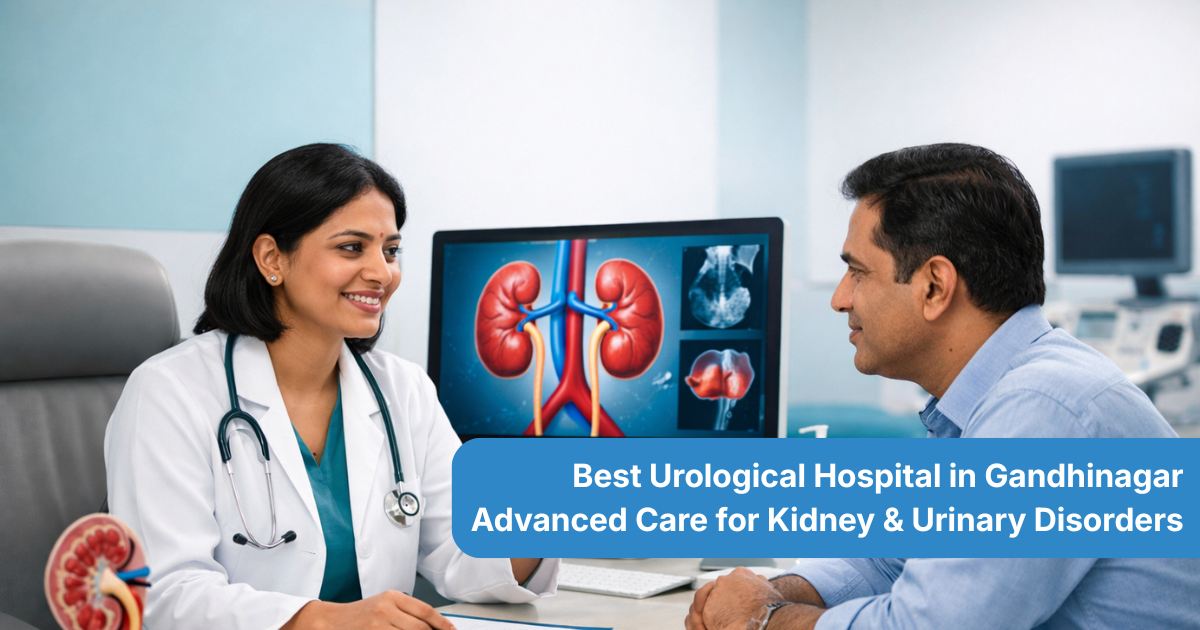
Best Urological Hospital in Gandhinagar: Advanced Care for Kidney & Urinary Disorders
Until something goes wrong, nobody really considers their kidneys or urinary health. Panic strikes when there's a sudden, intense lower back pain, blood in the urine, or that terrible urge to go to the bathroom every 20 minutes. "Is this a serious situation? Do I require surgery? "Where do I even go?"
The truth is that urological disorders are becoming more prevalent than most people realize. People of all ages are suffering from kidney stones, prostate enlargement, urinary tract infections, and even urological cancers. What's the worst? Many people either put off getting treatment or wind up in a general hospital that isn't prepared to treat these conditions with the accuracy they require.
That's exactly why finding the best urological hospital in Gandhinagar matters so much. This blog will cover the scope of urology, common conditions treated, available treatments, and considerations when selecting care.
What Is Urology?

The medical specialty of urology focuses on the male reproductive system as well as the urinary tract system, which includes the kidneys, ureters, bladder, and urethra in both men and women. A urologist in Gandhinagar is trained to diagnose and treat everything from kidney stones and bladder infections to prostate problems and urological cancers.
Urology is different because it combines surgery and medicine. While some conditions can be controlled with medication and lifestyle modifications, others necessitate surgery or minimally invasive procedures. When kidney stones are detected early, they can be treated with laser or shock wave therapy, which nearly always results in better outcomes. If left untreated, it might require open surgery. Early detection of a prostate problem makes it very manageable; years of neglect make it much more difficult.
This is why regular check-ups and early consultation with a good urology hospital in Gandhinagar can genuinely make a difference in both treatment options and recovery time.
Also Read - Lower Back Pain in Women: Causes, Symptoms & Treatment Options
Common Urological Conditions Treated
Kidney Stones
One of the most severe and painful experiences a person can have is kidney stones; some people say it's worse than giving birth. They can range in size from small, manageable stones to massive ones that completely obstruct urine flow. They are created when minerals and salts crystallize in the kidneys. Severe lower back or flank pain, nausea, blood in the urine, and trouble urinating are some of the symptoms. Kidney stone treatment in Gandhinagar has advanced significantly, and most stones today can be treated without open surgery.
Prostate Enlargement (BPH)
In men over 50, benign prostatic hyperplasia, or BPH, is incredibly common. Weak urine flow, frequent nighttime urination, and trouble starting or stopping urination are all symptoms of the prostate gland's growth and pressure against the urethra. It's not cancer, but it significantly affects quality of life and needs medical attention. Prostate treatment in Gandhinagar now includes minimally invasive surgical options along with medication.
Urinary Tract Infections (UTIs)
Although they can affect anyone, UTIs are more common in women. Antibiotics can sometimes be used to treat mild UTIs, but urological evaluation is necessary to exclude underlying conditions or structural problems in cases of recurrent or complicated UTIs. A UTI can spread to the kidneys and worsen if left untreated.
Bladder Disorders
Overactive bladder, interstitial cystitis (a chronic, painful condition), bladder stones, and neurogenic bladder (a condition in which nerve damage affects bladder control) are examples of bladder conditions. Instead of being written off as "normal aging," these conditions should be properly evaluated by a urologist because they significantly impact day-to-day living.
Urological Cancers
Urologists treat cancers of the kidney, bladder, and prostate. Early detection is everything with these cancers, and regular screening, especially for men above 40-50, can catch them at a treatable stage. Never ignore symptoms such as ongoing urinary changes, blood in the urine, or unexplained weight loss.
Advanced Treatments & Technology Available
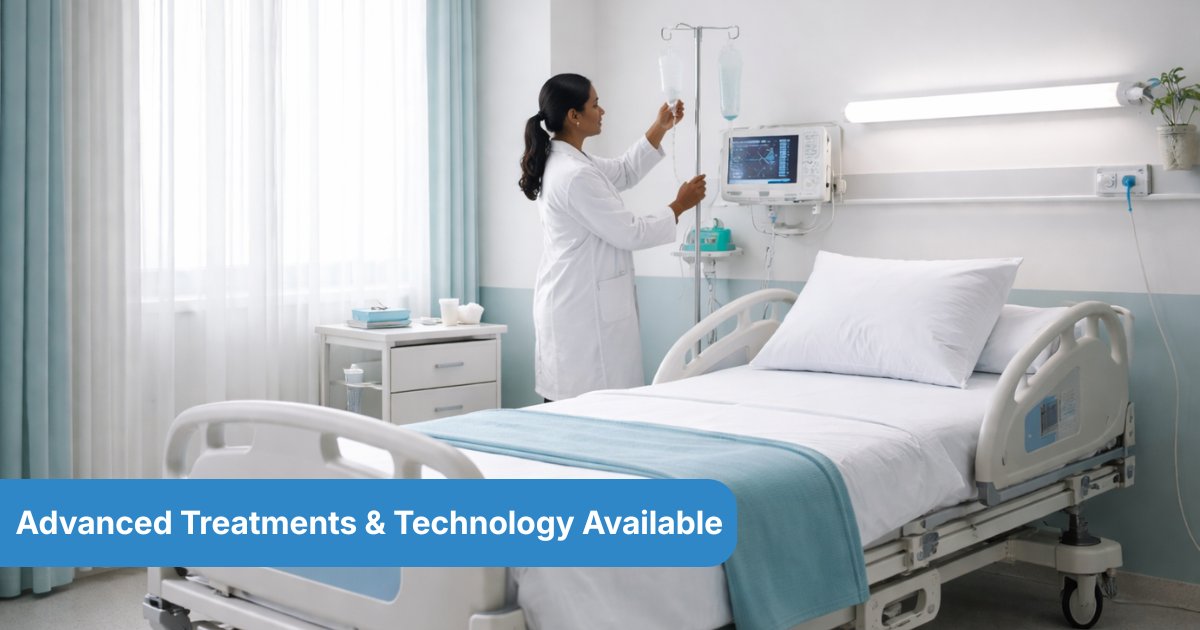
This is where things get genuinely impressive. For those in and around Gandhinagar, healthcare centres are offering a full-fledged Department of Urology and Urosurgery, equipped with technology that is on par with top-tier hospitals
Here's what's available at this advanced urology hospital in Gandhinagar:
- Laser kidney stone surgery, Gandhinagar: Laser procedures for stone removal are much less painful, require less recovery time, and completely avoid large incisions. For comprehensive endourological stone management, the hospital employs intracorporeal pneumatic and ultrasonic lithotripsy.
- ESWL (Extracorporeal Shock Wave Lithotripsy): It uses shock waves to break kidney stones smaller than 1.5 cm without making any incisions. For accuracy, the advanced device employs laser-guided localization, C-arm, and ultrasound.
- Minimally invasive urology surgery: The hospital is equipped to perform laparoscopic urology procedures, such as laparoscopic radical prostate surgery, pyeloplasty, ureteric stone surgeries, and laparoscopic nephrectomy. Minimally invasive means smaller cuts, less blood loss, faster recovery, and significantly less post-operative pain.
- Endourology treatments: In a cutting-edge operating room, the department uses instruments such as ureteroscopes, flexible cystoscopes, nephroscopes, and flexible ureteroscopes, all supported by Olympus equipment, to perform advanced endourological procedures.
- Oncology: biopsy-guided high-resolution transrectal ultrasound for prostate cancer early detection and treatment. There are options for urological cancer surgery to treat cancers of the bladder, prostate, kidney, and testicles.
- Neurourology: Pediatric urology, reconstructive urological surgery, urodynamic evaluation, and surgical treatment, including TOT and TVT procedures, for female and male incontinence.
- In-house Nephrology support: With nine hemodialysis machines, peritoneal dialysis, CAPD, and a lab open 24/7, nephrology and urology allow patients with kidney disease, dialysis needs, or transplant requirements to be treated under one roof.
- 64-slice CT Scan and modern diagnostic imaging: For accurate treatment and surgical planning.
Also Read - How to Choose the Right Emergency Hospital in Gandhinagar
Why Choose the Best Urological Hospital in Gandhinagar?

Since there are many hospitals in the area, why is picking the best one for urology important?
Procedures in urology require accuracy. Because of the complexity of the urinary tract and its surrounding structures, a successful outcome frequently depends on the surgeon's experience and the equipment that is available. What distinguishes a truly excellent urological setup is as follows:
- Experienced urologists: Committed urology and urosurgery specialists supported by a group of top-notch anesthetists.
- Modern operating theatres: Alleger C-arm, Xenon light source, and Olympus equipment all contribute to precision and safety during procedures.
- 24/7 emergency care: Urinary blockages and kidney stone emergencies don't have a set course. Patients who receive continuous care are protected at all times.
- HDU and ICU backup: Within the OT complex for added safety during complex procedures.
- Daycare for simpler surgeries: Convenient and economical, not all procedures require an overnight stay.
- Mediclaim cashless facility: Insurance-impanelled services mean less financial stress at the time of treatment.
- Patient-first approach: For documentation and patient education, procedures are videotaped. This is a considerate touch that demonstrates true transparency.
Cost of Urological Treatments in Gandhinagar
Urology treatment cost in Gandhinagar varies based on the procedure type, whether it's minimally invasive or open surgery, hospital stay duration, and post-operative care. While laparoscopic procedures are initially more expensive, they save money over time due to a shorter recovery period and fewer complications. ESWL is one of the less expensive options because it doesn't require an incision. For a realistic estimate, it is best to speak with the surgical team directly about cancer surgeries. Impanelled insurers can use the Mediclaim cashless facility, which greatly lessens the financial burden for the majority of patients.
Also Read - Best Physiotherapy Center in Gandhinagar: Treatments, Costs & Benefits
How to Choose the Right Urological Hospital
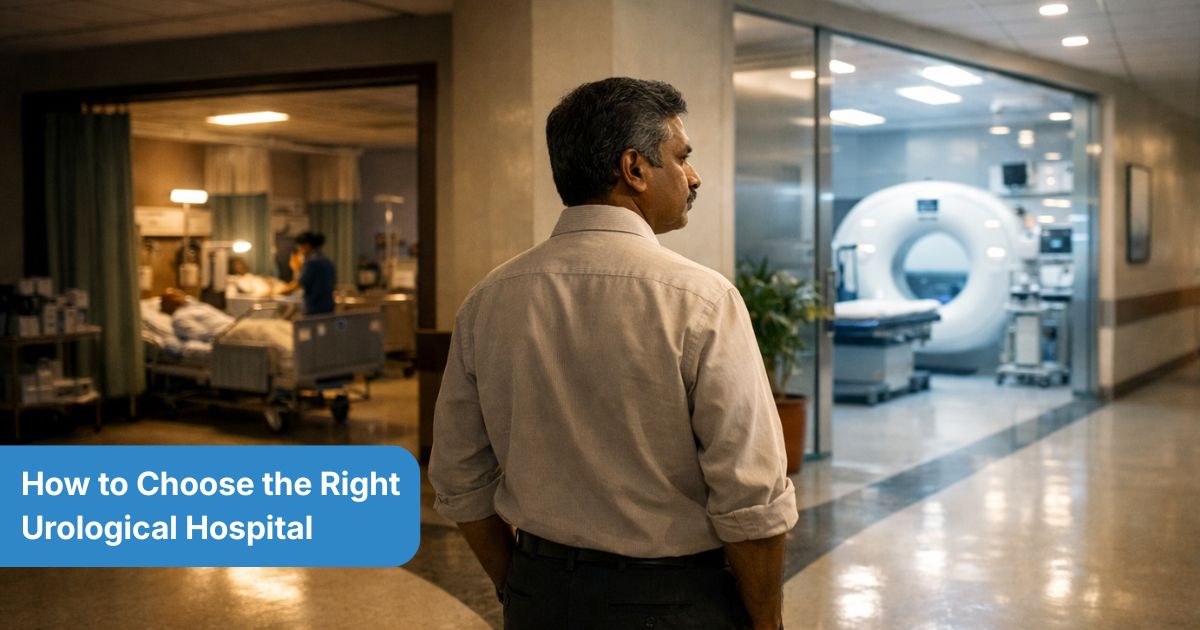
Take your time making this choice. Urologists and urosurgery specialists; advanced equipment such as laser lithotripsy, laparoscopic setup, and CT imaging; in-house nephrology support because kidney and urological conditions often overlap; real patient reviews; robust post-surgery follow-up care; and round-the-clock emergency availability for acute situations like ureteric colic or urinary obstruction are some things to look for.
When Should You Actually Visit a Urologist?
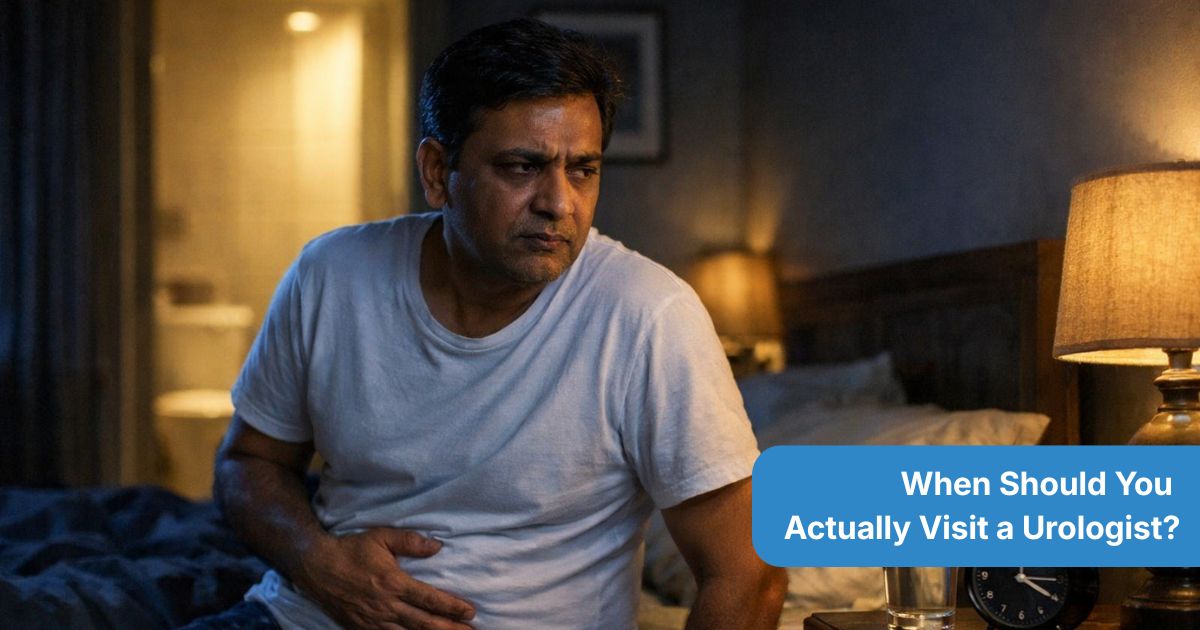
Many people wait too long. Here are the signs it's time to see a urologist in Gandhinagar without delay:
- Waves of intense lower abdominal or flank pain are a classic sign of kidney stones.
- Don't ignore blood in your urine, even if it occurs only once.
- Frequent urination, particularly waking up several times during the night
- Urination difficulties or a weak, sporadic stream
- Pain or burning during urination
- Constant pressure or discomfort in the pelvis
- Prostate screening is a preventative measure that men over 45 should think about.
Get checked if kidney/bladder function or urination feels strange for longer than a few days. Compared to postponing treatment, early consultation is nearly always simpler, less expensive, and less stressful.
Conclusion
Urological health is not something to put off. Early intervention almost always results in a simpler, safer outcome, whether the issue is a kidney stone that has been bothering you for weeks, a urinary symptom that keeps coming back, or a prostate issue that you've been ignoring in private.
When it comes to finding the best urological hospital in Gandhinagar, what matters most is a place that brings together experienced specialists, advanced surgical technology, solid nephrology backup, and 24/7 emergency care all under one roof. Advanced Superspeciality Hospital checks those boxes, and getting a consultation sooner rather than later is always the smarter move.
Yes, laser treatments for kidney stones are well-researched, minimally invasive, don't involve big cuts, and usually leave patients feeling better in a day or two.
It depends on the process. Simple cystoscopy and other daycare procedures require minimal recovery. Laparoscopic procedures usually require a few weeks of recovery at home and two to five days in the hospital. Although they are now much less common, open surgeries have a longer curve.
Not all the time. For less complicated urological procedures, daycare facilities are available; in many cases, admission and discharge can take place on the same day.
Around age 40 is when men who have a family history of prostate cancer should begin. For others, the general rule is 45 to 50. Usually, a clinical examination and a PSA blood test are sufficient to start.