
 Ambulance
911 8483 911 Helpline
916 6216 916
Blog

- Apr 24, 2026
Chest Pain Due to Gas: Everything You Need to Know
So there you are, sitting after a heavy meal, when suddenly there's a sharp, uncomfortable pressure in your chest. The first thought that crosses the mind? Is this serious? Is this my heart? And then comes the burp, the bloating, and, slowly, the discomfort begins to ease. Turns out, it was just chest pain due to gas.
This happens to more people than you'd think, and it genuinely can be scary at that time, especially when it feels like heart pain due to gas. The chest is supposed to be "heart territory," so any kind of pain there tends to send everyone into a quiet panic. But most of the time that tight, pressing feeling is completely manageable once you know what’s going on, and that’s exactly what this blog is here to help with. From causes and symptoms to home remedies, everything is covered right here.
Understanding Chest Pain Due to Gas
Gas buildup in the digestive system can sometimes create pressure that radiates up to the chest. This pressure can be sharp, burning, or tight and often mimics pain related to the heart, which is why it causes concern.
When gas gets trapped in the stomach or intestines, it can push against the diaphragm. The diaphragm lies just beneath the chest cavity. This pressure can easily be mistaken for coming from the heart or lungs, which is why many people confuse it with heart pain due to gas.
In many cases, this discomfort is temporary and improves once the gas passes. But understanding what this pain is will help avoid confusion and anxiety.
What Are the Causes of Gas Pain in the Chest?
Gas pain in the chest doesn't occur at random; there's usually a trigger, and once you identify it, the patterns start to become clearer. Some of the most common causes are:
- Swallowing air: Eating too fast, drinking carbonated beverages, chewing gum, or talking while eating can cause excess air to be trapped in the digestive tract.
- Gas-producing foods: Classic culprits are beans, lentils, cabbage, broccoli, onions, dairy products, and fried or spicy foods. Either they produce gas during digestion or slow things down to allow fermentation to occur.
- Acid reflux and GERD: Acid from the stomach backing up into the esophagus often brings gas in the chest with it. This causes a burning, pressure-like discomfort that’s easy to mistake for cardiac.
- Irritable Bowel Syndrome (IBS): People with IBS often become sensitive to gas in the digestive tract, to the point where normal amounts can be painful.
- Constipation: When stool moves slowly through the intestines, gas that gets trapped has nowhere to go, and pressure can build up toward the chest.
Also Read: Kidney Stone Symptoms in Women: Early Signs You Should Never Ignore
What Are the Symptoms of Chest Pain Due to Gas?
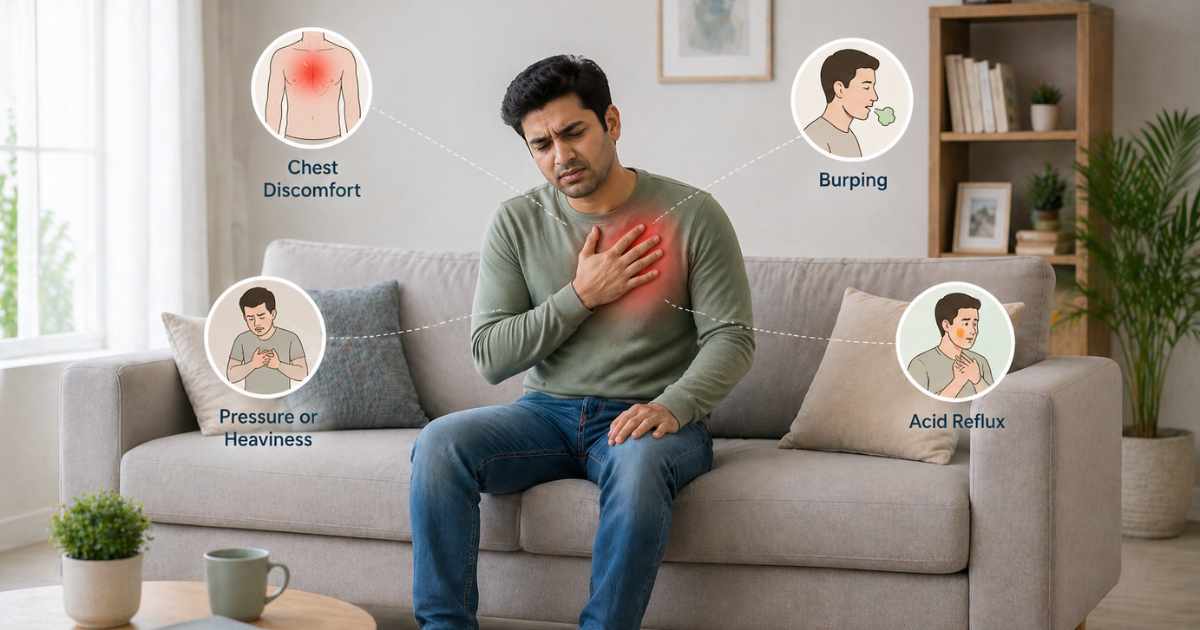
The symptoms of chest pain due to gas can look different from person to person, but there are some common signs to look for that point to the discomfort being related to gas and not something cardiac. They include:
- A sudden, stabbing, or cramping pain in the chest or upper abdomen
- Feeling full, tight, or pressure in the chest
- Bloating and a visibly swollen abdomen
- Frequent burping or belching that brings some relief
- Passing gas (flatulence) can relieve the discomfort
- Nausea, particularly after a heavy or oily meal
- Pain that moves around from the chest to the back, sides, or abdomen
- Discomfort that gets better after a bowel movement
One thing to note: gas pain often shifts location. It doesn’t stay in one place like cardiac pain tends to. If the discomfort moves around, comes and goes, and is relieved by burping or passing gas, that’s a good indicator that it’s of a digestive nature.
Also Read: Lower Back Pain in Women: Causes, Symptoms & Treatment Options
Difference Between Chest Pain Due to Gas and a Heart Attack
 This is really the most critical part of understanding this condition, especially when heart pain due to gas feels similar to something more serious, knowing when to stay calm and when to act fast. The two can feel deceptively similar, so here's a practical comparison:
Gas-Related Chest Pain:
- Usually occurs after eating/drinking
- Pain shifts locations or moves
- Accompanied by bloating, burping, or flatulence
- Improves when gas is released or after antacids
- No sweating, no shortness of breath
- Discomfort is often felt in the upper stomach or lower chest
Heart Attack:
- Can happen at any time, including at rest or during mild activity
- The pain is severe, crushing or pressure-like, frequently described as a “heavy weight on the chest.”
- May radiate to the left arm, jaw, neck, or back
- With sweating, shortness of breath, dizziness, or sudden nausea
- Does NOT get better with burping or antacids
- May be preceded by a sudden sense of anxiety or extreme tiredness
The honest reality is, if in doubt, always get checked. Advanced Superspeciality Hospital, Gandhinagar, is available 24x7 for the Emergency Department and Cardiology team. A quick ECG and assessment can help identify whether it’s something serious in a few minutes, and that reassurance is always worth it. Don’t ever ignore persistent chest pain just because it could be gas.Home Remedies for Chest Pain Due to Gas
 When the discomfort is clearly gas-related and mild, several tried-and-tested home remedies for chest pain due to gas genuinely work:
- Warm water with ginger: Ginger has natural anti-inflammatory and digestive properties. A cup of warm ginger tea can be very effective in moving gas along and easing cramping.
- Ajwain (carom seeds) with warm water: A classic remedy that works. Ajwain contains thymol, which helps to stimulate digestive enzymes and relieve gas build-up.
- Peppermint tea: Peppermint relaxes the muscles of the gastrointestinal tract, which can allow gas to pass more easily.
- Fennel seeds (saunf): Chewing fennel seeds after meals or brewing them into a tea helps in reducing bloating and gas.
- Asafoetida (hing): One of the most time-tested remedies for gas and bloating is to dissolve a pinch of hing in warm water.
- Warm compress on the abdomen: Rub a warm cloth or a hot water bottle over the abdomen. It relaxes the abdominal muscles and helps the gas to move.
- Light walking after meals: A 10-minute slow walk after eating a meal can do wonders for digestion and help prevent gas from building up.
How to Reduce Chest Pain Due to Gas?
Beyond immediate relief, reducing recurring gas pain in the chest comes down to consistent lifestyle habits:- Slow down while eating - Rushed eating means swallowed air, and swallowed air means trapped gas. Taking time to chew properly makes a real difference.
- Cut back on carbonated drinks - Fizzy drinks are full of carbon dioxide, which goes straight into the stomach and causes bloating.
- Be mindful of gas-triggering foods - If gas-producing foods are a recurrent problem, reduce the quantity but do not eliminate them. Just be aware of the amount and timing.
- Avoid lying down right after meals - It slows digestion and encourages acid and gas to travel upwards.
- Maintain good hydration - Water supports smooth digestion and prevents constipation, which is a major contributor to trapped gas.
- Manage stress - It’s very real, the gut-brain connection. Stress disrupts digestion and increases gut sensitivity. Regular movement, quality sleep, and breathing exercises meaningfully support good gut health.
If symptoms keep recurring despite these changes, a consultation with a gastroenterologist can identify whether there's an underlying condition like GERD, IBS, or a food intolerance driving the problem.When to See a Doctor
 Even though gas-related chest pain is common, there are times when medical attention becomes necessary.
Seek Medical Help If:
- Chest pain is severe or persistent
- Pain occurs frequently without a clear cause
- There is shortness of breath or dizziness
- Pain spreads to other parts of the body
- Symptoms do not improve with basic remedies
Healthcare facilities are equipped to evaluate chest pain thoroughly, ensuring that both digestive and cardiac causes are properly assessed. Timely diagnosis provides reassurance and prevents complications.Conclusion
Chest pain due to gas is far more common than most people realize, and in the majority of cases, it's not dangerous, just deeply uncomfortable. Understanding the triggers, recognizing the symptoms, and having a few practical home remedies on hand can make a real difference in how quickly relief comes.That said, the chest is not a place to take chances. Gas pain and cardiac pain can look very similar at the moment, which is why timely medical evaluation is important when symptoms feel unusual or persistent. The smart approach is to know the warning signs, act on them early, and seek professional care to ensure the cause is correctly diagnosed and more serious conditions are carefully evaluated. At Advanced Superspeciality Hospital, Gandhinagar, the right specialists are always ready, whether it's a digestive concern or an urgent cardiac issue. Maintaining good gut health, following mindful eating habits, and knowing when to consult a doctor can go a long way in preventing discomfort and ensuring overall well-being.FAQs
Can gas really cause chest pain?
Yes. When gas gets trapped in the stomach or intestines, the pressure it creates can push upward into the chest, causing sharp or pressure-like discomfort that can feel surprisingly intense.How to relieve gas pain instantly?
Walking around, sipping warm ginger or ajwain water, a gentle abdominal massage, and taking an antacid can all provide quick relief. Burping or passing gas naturally resolves it in many cases.Why do I feel gas stuck in my chest?
Gas can get trapped near the upper digestive tract, and the pressure it creates radiates into the chest. This is a common digestive complaint, especially after heavy or gas-producing meals.How do I get gas out of my chest?
Try walking, lying on your left side, gently massaging the abdomen in circular motions, or drinking warm herbal tea. Positions that encourage gas to move downward through the digestive tract tend to work best.What are some effective home remedies for chest pain due to gas?
Warm ginger or peppermint tea, ajwain water, fennel seeds, asafoetida (hing) dissolved in warm water, a warm compress on the abdomen, and light post-meal walking are all well-established and effective options.